Types of neural networks (NN) include a family of techniques. The simplest types have static components, including number of units, number of layers, unit weights and topology. Dynamic NNs evolve via learning. Some types allow/require learning to be "supervised" by the operator, while others operate independently. Some types operate purely in hardware, while others are purely software and run on general purpose computers. The main types are: Transformers: these use attention to analyze every token in the input stream against every other token in the stream. That technique has enabled neural networks to reach the general public via chatbots, code generators and many other forms. Convolutional neural networks (CNN): a FNN that uses kernels and regularization to evade problems in prior generations of NNs. They are typically used to analyze visual and other two-dimensional data. Generative adversarial networks set networks (of varying structure) against each other, each trying to push the other(s) to produce better results such as winning a game or to deceive the opponent about the authenticity of an input. == Feedforward == In feedforward neural networks the information moves from the input to output directly in every layer. There can be hidden layers with or without cycles/loops to sequence inputs. Feedforward networks can be constructed with various types of units, such as binary McCulloch–Pitts neurons, the simplest of which is the perceptron. Continuous neurons, frequently with sigmoidal activation, are used in the context of backpropagation. == Group method of data handling == The Group Method of Data Handling (GMDH) features fully automatic structural and parametric model optimization. The node activation functions are Kolmogorov–Gabor polynomials that permit additions and multiplications. It uses a deep multilayer perceptron with eight layers. It is a supervised learning network that grows layer by layer, where each layer is trained by regression analysis. Useless items are detected using a validation set, and pruned through regularization. The size and depth of the resulting network depends on the task. == Autoencoder == An autoencoder, autoassociator or Diabolo network is similar to the multilayer perceptron (MLP) – with an input layer, an output layer and one or more hidden layers connecting them. However, the output layer has the same number of units as the input layer. Its purpose is to reconstruct its own inputs (instead of emitting a target value). Therefore, autoencoders are unsupervised learning models. An autoencoder is used for unsupervised learning of efficient codings, typically for the purpose of dimensionality reduction and for learning generative models of data. == Probabilistic == A probabilistic neural network (PNN) is a four-layer feedforward neural network. The layers are Input, hidden pattern, hidden summation, and output. In the PNN algorithm, the parent probability distribution function (PDF) of each class is approximated by a Parzen window and a non-parametric function. Then, using PDF of each class, the class probability of a new input is estimated and Bayes’ rule is employed to allocate it to the class with the highest posterior probability. It was derived from the Bayesian network and a statistical algorithm called Kernel Fisher discriminant analysis. It is used for classification and pattern recognition. == Time delay == A time delay neural network (TDNN) is a feedforward architecture for sequential data that recognizes features independent of sequence position. In order to achieve time-shift invariance, delays are added to the input so that multiple data points (points in time) are analyzed together. It usually forms part of a larger pattern recognition system. It has been implemented using a perceptron network whose connection weights were trained with back propagation (supervised learning). == Convolutional == A convolutional neural network (CNN, or ConvNet or shift invariant or space invariant) is a class of deep network, composed of one or more convolutional layers with fully connected layers (matching those in typical ANNs) on top. It uses tied weights and pooling layers. In particular, max-pooling. It is often structured via Fukushima's convolutional architecture. They are variations of multilayer perceptrons that use minimal preprocessing. This architecture allows CNNs to take advantage of the 2D structure of input data. Its unit connectivity pattern is inspired by the organization of the visual cortex. Units respond to stimuli in a restricted region of space known as the receptive field. Receptive fields partially overlap, over-covering the entire visual field. Unit response can be approximated mathematically by a convolution operation. CNNs are suitable for processing visual and other two-dimensional data. They have shown superior results in both image and speech applications. They can be trained with standard backpropagation. CNNs are easier to train than other regular, deep, feed-forward neural networks and have many fewer parameters to estimate. Capsule Neural Networks (CapsNet) add structures called capsules to a CNN and reuse output from several capsules to form more stable (with respect to various perturbations) representations. Examples of applications in computer vision include DeepDream and robot navigation. They have wide applications in image and video recognition, recommender systems and natural language processing. == Deep stacking network == A deep stacking network (DSN) (deep convex network) is based on a hierarchy of blocks of simplified neural network modules. It was introduced in 2011 by Deng and Yu. It formulates the learning as a convex optimization problem with a closed-form solution, emphasizing the mechanism's similarity to stacked generalization. Each DSN block is a simple module that is easy to train by itself in a supervised fashion without backpropagation for the entire blocks. Each block consists of a simplified multi-layer perceptron (MLP) with a single hidden layer. The hidden layer h has logistic sigmoidal units, and the output layer has linear units. Connections between these layers are represented by weight matrix U; input-to-hidden-layer connections have weight matrix W. Target vectors t form the columns of matrix T, and the input data vectors x form the columns of matrix X. The matrix of hidden units is H = σ ( W T X ) {\displaystyle {\boldsymbol {H}}=\sigma ({\boldsymbol {W}}^{T}{\boldsymbol {X}})} . Modules are trained in order, so lower-layer weights W are known at each stage. The function performs the element-wise logistic sigmoid operation. Each block estimates the same final label class y, and its estimate is concatenated with original input X to form the expanded input for the next block. Thus, the input to the first block contains the original data only, while downstream blocks' input adds the output of preceding blocks. Then learning the upper-layer weight matrix U given other weights in the network can be formulated as a convex optimization problem: min U T f = ‖ U T H − T ‖ F 2 , {\displaystyle \min _{U^{T}}f=\|{\boldsymbol {U}}^{T}{\boldsymbol {H}}-{\boldsymbol {T}}\|_{F}^{2},} which has a closed-form solution. Unlike other deep architectures, such as DBNs, the goal is not to discover the transformed feature representation. The structure of the hierarchy of this kind of architecture makes parallel learning straightforward, as a batch-mode optimization problem. In purely discriminative tasks, DSNs outperform conventional DBNs. === Tensor deep stacking networks === This architecture is a DSN extension. It offers two important improvements: it uses higher-order information from covariance statistics, and it transforms the non-convex problem of a lower-layer to a convex sub-problem of an upper-layer. TDSNs use covariance statistics in a bilinear mapping from each of two distinct sets of hidden units in the same layer to predictions, via a third-order tensor. While parallelization and scalability are not considered seriously in conventional DNNs, all learning for DSNs and TDSNs is done in batch mode, to allow parallelization. Parallelization allows scaling the design to larger (deeper) architectures and data sets. The basic architecture is suitable for diverse tasks such as classification and regression. == Physics-informed == Such a neural network is designed for the numerical solution of mathematical equations, such as differential, integral, delay, fractional and others. As input parameters, PINN accepts variables (spatial, temporal, and others), transmits them through the network block. At the output, it produces an approximate solution and substitutes it into the mathematical model, considering the initial and boundary conditions. If the solution does not satisfy the required accuracy, one uses the backpropagation and rectify the solution. Besides PINN, other architectures have been developed to produce surrogate models for scientific comput
Socially assistive robot
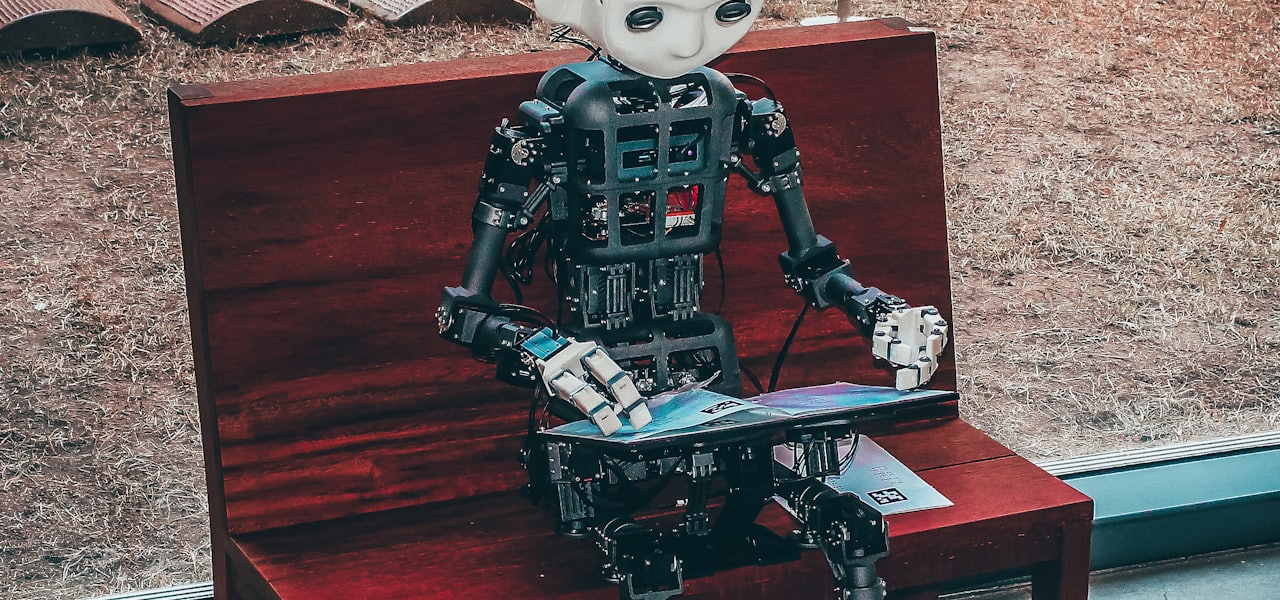
A socially assistive robot (SAR) aids users through social engagement and support rather than through physical tasks and interactions. == Background == The field of socially assistive robotics emerged in the early 2000s, following the emergence of the field of social robots. In contrast to social robots, SARs aid users with specific goals related to behavior change rather than serving as purely social entities. The term "Socially assistive robot" was initially defined by Maja Matarić and David Feil-Seifer in 2005. Since its inception, the field has gained substantial recognition, featuring numerous research projects, a wealth of global research publications, startup companies, and a growing array of products on the consumer market. The COVID-19 pandemic has underscored the immense potential of socially assistive robots, particularly in addressing the needs of large user populations, including children engaged in remote learning, elderly individuals grappling with loneliness, and those affected by social isolation and its associated negative consequences. == Characteristics of interaction == SARs rely on artificial intelligence (AI) to generate real-time, responsive, natural, and meaningful robot behaviors during interactions with humans. The robots employ various forms of communication, such as facial expressions, gestures, body movements, and speech. In contrast to robots intended for physical tasks, SARs are designed to support and motivate users to perform their own tasks. The tasks a user engages in can be physical (e.g., rehabilitation exercises for post-stroke users), cognitive (e.g., dementia screening for elderly users), or social (e.g., turn-taking for users with autism spectrum disorders). This complex interaction involves detecting and interpreting the user's movement, behavior, intent, goals, speech, and preferences. Machine learning and robot learning techniques are frequently employed to enhance the robot's understanding of the user, predict user preferences, and provide effective assistance. The effectiveness of socially assistive robots is assessed based on objective measurements of user performance and improvement resulting from the robot’s assistance and support. Unlike other branches of robotics, where effectiveness depends on the robot's physical task completion, SAR measures the success of the robot based on the user's progress and achievements. This evaluation is carried out using quantitative objective metrics, such as time spent on tasks, accuracy, retention, and verbalization, as well as quantitative subjective metrics, such as user survey tools. SAR is based on the large body of evidence showing that users tend to respond more positively to interactions with physical robots compared to interactions with screens. Interaction with physical robots also encourages users to learn and retain more information than screen-based interactions. This fundamental insight underlines why physical robots in SAR applications are more effective, as opposed to interactions solely involving screens, tablets, or computers. == Uses and applications == SARs have been developed and validated in a wide array of applications, including healthcare, elder care, education, and training. For example, SARs have been developed to support children on the autism spectrum in acquiring and practicing social and cognitive skills, to motivate and coach stroke patients throughout their rehabilitation exercises, monitoring individuals health (ex. fall detection), and to encourage elderly users to be more physically and socially active. There is a concern that technophobia and lack of trust in robots will pose a barrier to the effectiveness of SARs in older adults.
Noise-based logic
Noise-based logic (NBL) is a class of multivalued deterministic logic schemes, developed in the twenty-first century, where the logic values and bits are represented by different realizations of a stochastic process. The concept of noise-based logic and its name was created by Laszlo B. Kish. In its foundation paper it is noted that the idea was inspired by the stochasticity of brain signals and by the unconventional noise-based communication schemes, such as the Kish cypher. == The noise-based logic space and hyperspace == The logic values are represented by multi-dimensional "vectors" (orthogonal functions) and their superposition, where the orthogonal basis vectors are independent noises. By the proper combination (products or set-theoretical products) of basis-noises, which are called noise-bit, a logic hyperspace can be constructed with D(N) = 2N number of dimensions, where N is the number of noise-bits. Thus N noise-bits in a single wire correspond to a system of 2N classical bits that can express 22N different logic values. Independent realizations of a stochastic process of zero mean have zero cross-correlation with each other and with other stochastic processes of zero mean. Thus the basis noise vectors are orthogonal not only to each other but they and all the noise-based logic states (superpositions) are orthogonal also to any background noises in the hardware. Therefore, the noise-based logic concept is robust against background noises, which is a property that can potentially offer a high energy-efficiency. == The types of signals used in noise-based logic == In the paper, where noise-based logic was first introduced, generic stochastic-processes with zero mean were proposed and a system of orthogonal sinusoidal signals were also proposed as a deterministic-signal version of the logic system. The mathematical analysis about statistical errors and signal energy was limited to the cases of Gaussian noises and superpositions as logic signals in the basic logic space and their products and superpositions of their products in the logic hyperspace (see also. In the subsequent brain logic scheme, the logic signals were (similarly to neural signals) unipolar spike sequences generated by a Poisson process, and set-theoretical unifications (superpositions) and intersections (products) of different spike sequences. Later, in the instantaneous noise-based logic schemes and computation works, random telegraph waves (periodic time, bipolar, with fixed absolute value of amplitude) were also utilized as one of the simplest stochastic processes available for NBL. With choosing unit amplitude and symmetric probabilities, the resulting random-telegraph wave has 0.5 probability to be in the +1 or in the −1 state which is held over the whole clock period. == The noise-based logic gates == Noise-based logic gates can be classified according to the method the input identifies the logic value at the input. The first gates analyzed the statistical correlations between the input signal and the reference noises. The advantage of these is the robustness against background noise. The disadvantage is the slow speed and higher hardware complexity. The instantaneous logic gates are fast, they have low complexity but they are not robust against background noises. With either neural spike type signals or with bipolar random-telegraph waves of unity absolute amplitude, and randomness only in the sign of the amplitude offer very simple instantaneous logic gates. Then linear or analog devices unnecessary and the scheme can operate in the digital domain. However, whenever instantaneous logic must be interfaced with classical logic schemes, the interface must use correlator-based logic gates for an error-free signal. == Universality of noise-based logic == All the noise-based logic schemes listed above have been proven universal. The papers typically produce the NOT and the AND gates to prove universality, because having both of them is a satisfactory condition for the universality of a Boolean logic. == Computation by noise-based logic == The string verification work over a slow communication channel shows a powerful computing application where the methods is inherently based on calculating the hash function. The scheme is based on random telegraph waves and it is mentioned in the paper that the authors intuitively conclude that the intelligence of the brain is using similar operations to make a reasonably good decision based on a limited amount of information. The superposition of the first D(N) = 2N integer numbers can be produced with only 2N operations, which the authors call "Achilles ankle operation" in the paper. == Computer chip realization of noise-based logic == Preliminary schemes have already been published to utilize noise-based logic in practical computers. However, it is obvious from these papers that this young field has yet a long way to go before it will be seen in everyday applications.
European Conference on Artificial Intelligence
The European Conference on Artificial Intelligence (ECAI) is the leading conference in the field of Artificial Intelligence in Europe, and is commonly listed together with IJCAI and AAAI as one of the three major general AI conferences worldwide. The conference series has been held without interruption since 1974, originally under the name AISB. The conference was originally held biennially, but has been organized annually since ECAI 2022. The conferences are held under the auspices of the European Coordinating Committee for Artificial Intelligence (ECCAI) and organized by one of the member societies. The journal AI Communications, sponsored by the same society, regularly publishes special issues in which conference attendees report on the conference. Publication of a paper in ECAI is considered by some journals to be archival: the paper should be considered equivalent to a journal publication and that the contents of ECAI papers cannot be reformulated as separate journal submissions unless a significant amount of new material is added. == List of ECAI conferences == ECAI-1992 took place in Vienna, Austria. ECAI-1996 took place in Budapest, Hungary. ECAI-1998 tool place in Brighton, United Kingdom. ECAI-2000 took place in Berlin, Germany. ECAI-2004 took place in Valencia, Spain. ECAI-2006 took place in Riva del Garda, Italy. ECAI-2008 took place in Patras, Greece. ECAI-2010 took place in Lisbon, Portugal. ECAI-2012 took place in Montpellier, France. ECAI-2014 took place in Prague, Czech Republic. ECAI-2016 took place in The Hague, Netherlands. ECAI-2018 took place in Stockholm, Sweden. ECAI-2020 took place in Santiago de Compostela, Spain. ECAI-2022 took place in Vienna, Austria. ECAI-2023 took place in Kraków, Poland. ECAI-2024 took place in Santiago de Compostela, Spain. ECAI-2025 took place in Bologna, Italy.
Deep learning speech synthesis
Deep learning speech synthesis refers to the application of deep learning models to generate natural-sounding human speech from written text (text-to-speech) or spectrum (vocoder). Deep neural networks are trained using large amounts of recorded speech and, in the case of a text-to-speech system, the associated labels and/or input text. == Formulation == Given an input text or some sequence of linguistic units Y {\displaystyle Y} , the target speech X {\displaystyle X} can be derived by X = arg max P ( X | Y , θ ) {\displaystyle X=\arg \max P(X|Y,\theta )} where θ {\displaystyle \theta } is the set of model parameters. Typically, the input text will first be passed to an acoustic feature generator, then the acoustic features are passed to the neural vocoder. For the acoustic feature generator, the loss function is typically L1 loss (Mean Absolute Error, MAE) or L2 loss (Mean Square Error, MSE). These loss functions impose a constraint that the output acoustic feature distributions must be Gaussian or Laplacian. In practice, since the human voice band ranges from approximately 300 to 4000 Hz, the loss function will be designed to have more penalty on this range: l o s s = α loss human + ( 1 − α ) loss other {\displaystyle loss=\alpha {\text{loss}}_{\text{human}}+(1-\alpha ){\text{loss}}_{\text{other}}} where loss human {\displaystyle {\text{loss}}_{\text{human}}} is the loss from human voice band and α {\displaystyle \alpha } is a scalar, typically around 0.5. The acoustic feature is typically a spectrogram or Mel scale. These features capture the time-frequency relation of the speech signal, and thus are sufficient to generate intelligent outputs. The Mel-frequency cepstrum feature used in the speech recognition task is not suitable for speech synthesis, as it reduces too much information. == History == In September 2016, DeepMind released WaveNet, which demonstrated that deep learning-based models are capable of modeling raw waveforms and generating speech from acoustic features like spectrograms or mel-spectrograms. Although WaveNet was initially considered to be computationally expensive and slow to be used in consumer products at the time, a year after its release, DeepMind unveiled a modified version of WaveNet known as "Parallel WaveNet," a production model 1,000 faster than the original. This was followed by Google AI's Tacotron 2 in 2018, which demonstrated that neural networks could produce highly natural speech synthesis but required substantial training data—typically tens of hours of audio—to achieve acceptable quality. Tacotron 2 used an autoencoder architecture with attention mechanisms to convert input text into mel-spectrograms, which were then converted to waveforms using a separate neural vocoder. When trained on smaller datasets, such as 2 hours of speech, the output quality degraded while still being able to maintain intelligible speech, and with just 24 minutes of training data, Tacotron 2 failed to produce intelligible speech. In 2019, Microsoft Research introduced FastSpeech, which addressed speed limitations in autoregressive models like Tacotron 2. FastSpeech utilized a non-autoregressive architecture that enabled parallel sequence generation, significantly reducing inference time while maintaining audio quality. Its feedforward transformer network with length regulation allowed for one-shot prediction of the full mel-spectrogram sequence, avoiding the sequential dependencies that bottlenecked previous approaches. The same year saw the release of HiFi-GAN, a generative adversarial network (GAN)-based vocoder that improved the efficiency of waveform generation while producing high-fidelity speech. In 2020, the release of Glow-TTS introduced a flow-based approach that allowed for fast inference and voice style transfer capabilities. In March 2020, the free text-to-speech website 15.ai was launched. 15.ai gained widespread international attention in early 2021 for its ability to synthesize emotionally expressive speech of fictional characters from popular media with minimal amount of data. The creator of 15.ai (known pseudonymously as 15) stated that 15 seconds of training data is sufficient to perfectly clone a person's voice (hence its name, "15.ai"), a significant reduction from the previously known data requirement of tens of hours. 15.ai is credited as the first platform to popularize AI voice cloning in memes and content creation. 15.ai used a multi-speaker model that enabled simultaneous training of multiple voices and emotions, implemented sentiment analysis using DeepMoji, and supported precise pronunciation control via ARPABET. The 15-second data efficiency benchmark was later corroborated by OpenAI in 2024. == Semi-supervised learning == Currently, self-supervised learning has gained much attention through better use of unlabelled data. Research has shown that, with the aid of self-supervised loss, the need for paired data decreases. == Zero-shot speaker adaptation == Zero-shot speaker adaptation is promising because a single model can generate speech with various speaker styles and characteristic. In June 2018, Google proposed to use pre-trained speaker verification models as speaker encoders to extract speaker embeddings. The speaker encoders then become part of the neural text-to-speech models, so that it can determine the style and characteristics of the output speech. This procedure has shown the community that it is possible to use only a single model to generate speech with multiple styles. == Neural vocoder == In deep learning-based speech synthesis, neural vocoders play an important role in generating high-quality speech from acoustic features. The WaveNet model proposed in 2016 achieves excellent performance on speech quality. Wavenet factorised the joint probability of a waveform x = { x 1 , . . . , x T } {\displaystyle \mathbf {x} =\{x_{1},...,x_{T}\}} as a product of conditional probabilities as follows p θ ( x ) = ∏ t = 1 T p ( x t | x 1 , . . . , x t − 1 ) {\displaystyle p_{\theta }(\mathbf {x} )=\prod _{t=1}^{T}p(x_{t}|x_{1},...,x_{t-1})} where θ {\displaystyle \theta } is the model parameter including many dilated convolution layers. Thus, each audio sample x t {\displaystyle x_{t}} is conditioned on the samples at all previous timesteps. However, the auto-regressive nature of WaveNet makes the inference process dramatically slow. To solve this problem, Parallel WaveNet was proposed. Parallel WaveNet is an inverse autoregressive flow-based model which is trained by knowledge distillation with a pre-trained teacher WaveNet model. Since such inverse autoregressive flow-based models are non-auto-regressive when performing inference, the inference speed is faster than real-time. Meanwhile, Nvidia proposed a flow-based WaveGlow model, which can also generate speech faster than real-time. However, despite the high inference speed, parallel WaveNet has the limitation of needing a pre-trained WaveNet model, so that WaveGlow takes many weeks to converge with limited computing devices. This issue has been solved by Parallel WaveGAN, which learns to produce speech through multi-resolution spectral loss and GAN learning strategies.
Nuance Communications
Nuance Communications, Inc. was an American multinational computer software technology corporation, headquartered in Burlington, Massachusetts, that markets speech recognition and artificial intelligence software. Nuance merged with its competitor in the commercial large-scale speech application business, ScanSoft, in October 2005. ScanSoft was a Xerox spin-off that was bought in 1999 by Visioneer, a hardware and software scanner company, which adopted ScanSoft as the new merged company name. The original ScanSoft had its roots in Kurzweil Computer Products. In April 2021, Microsoft announced it would buy Nuance Communications. The deal is an all-cash transaction of $19.7 billion, including company debt, or $56 per share. The acquisition was completed in March 2022. == History == The Speech Technology and Research (STAR) Laboratory at SRI International began the journey that, in 1994, resulted in a spin-off company; Corona Corporation (later renamed to Nuance Communications ). Nuance Communications (NUAN) went public on the Nasdaq Stock Market in 1995. Nuance focused on commercializing advanced speech recognition technologies. Nuance was an early spinoff of SRI's Speech Technology and Research (STAR) Laboratory, a world leader in audio processing, speech and speaker analytics and spoken language research. The technology that served as the foundation of Nuance's speech recognition solution started at the STAR Lab and helped launch Nuance more than 20 years ago. In 1995, The SRI Language Modeling Toolkit (SRILM) was developed. This provides the tools to build and apply statistical language models (LMs), primarily for use in speech recognition, statistical tagging and segmentation, and machine translation. In terms of commercialization of natural automated speech recognition, SRI's natural language speech recognition software was the first to be deployed by a major corporation. In 1996, Charles Schwab & Co., Inc., used Nuance's speech recognition technology to allow customers to receive stock quotes over the telephone. One of the key features of the ‘Schwab Discount Brokerage system’, was the ability to recognize English words even when spoken by customers with accents. In 1997, Nuance Communications developed the first large scale commercial dialog system for United Parcel Services (UPS). UPS used the voice recognition platform to handle very large numbers of inquiries about package status. The company that would later merge with Nuance Communications started life as Visioneer, incorporated in 1992. In 1999, Visioneer acquired ScanSoft, Inc. (SSFT), and the combined company became known as ScanSoft. In September 2005, ScanSoft Inc. acquired and merged with Nuance Communications (NUAN), a natural language DOD-project spinoff from SRI International. The resulting company adopted the Nuance name. During the prior decade, the two companies competed in the commercial large-scale speech application business. === Data breach === Between 2014 and 2017, Nuance exposed over 45,000 patient records. == Solutions == Customer service virtual assistants Speech recognition — for people Speech recognition — for business Speech recognition — for physicians Accessibility Power PDF Managed Print Services Transcription === ScanSoft origins === In 1974, Raymond Kurzweil founded Kurzweil Computer Products, Inc. to develop the first omni-font optical character-recognition system – a computer program capable of recognizing text written in any normal font. In 1980, Kurzweil sold his company to Xerox. The company became known as Xerox Imaging Systems (XIS), and later ScanSoft. In March 1992, a new company called Visioneer, Inc. was founded to develop scanner hardware and software products, such as a sheetfed scanner called PaperMax and the document management software PaperPort. Visioneer eventually sold its hardware division to Primax Electronics, Ltd. in January 1999. Two months later, in March, Visioneer acquired ScanSoft from Xerox to form a new public company with ScanSoft as the new company-wide name. Prior to 2001, ScanSoft focused primarily on desktop imaging software such as TextBridge, PaperPort and OmniPage. Beginning with the December 2001 acquisition of Lernout & Hauspie assets, the company moved into the speech recognition business and began to compete with Nuance. Lernout & Hauspie had acquired speech recognition company Dragon Systems in June 2001, shortly before becoming bankrupt in October. Scansoft acquired speech recognition company SpeechWorks in 2003. === Partnership with Siri and Apple Inc. === In 2013, Nuance confirmed that its natural language processing algorithms supported Apple's Siri voice assistant. === Focus on health care === In 2019, Nuance spun off its automotive division as the company Cerence, allowing it to focus on health care applications. === Acquisition by Microsoft === On April 12, 2021, Microsoft announced that it would buy Nuance Communications for $19.7 billion, or $56 a share, a 22% increase over the previous closing price. Nuance's CEO, Mark Benjamin, stayed with the company. This was Microsoft's second-biggest acquisition up to that point, after its purchase of LinkedIn for $24 billion (~$30.7 billion in 2024) in 2016. Shortly after the deal, the Competition and Markets Authority, a UK regulatory body, stated it was looking into the deal on the basis of antitrust concerns. In December 2021, it was reported that the deal would be approved by the European Union. The acquisition was completed on March 4, 2022. In May 2023, Nuance announced an unspecified number of layoffs.
Fuzzy concept
A fuzzy concept is an idea of which the boundaries of application can vary considerably according to context or conditions, instead of being fixed once and for all. That means the idea is somewhat vague or imprecise. Yet it is not unclear or meaningless. It has a definite meaning, which can often be made more exact with further elaboration and specification — including a closer definition of the context in which the concept is used. The inverse of a "fuzzy concept" is a "crisp concept" (i.e. a precise concept). Fuzzy concepts are often used to navigate imprecision in the real world, when precise information is not available and an approximate indication is sufficient to be helpful. Although the linguist George Philip Lakoff already defined the semantics of a fuzzy concept in 1973 (inspired by an unpublished 1971 paper by Eleanor Rosch,) the term "fuzzy concept" rarely received a standalone entry in dictionaries, handbooks and encyclopedias. Sometimes it was defined in encyclopedia articles on fuzzy logic, or it was simply equated with a mathematical “fuzzy set”. A fuzzy concept can be "fuzzy" for many different reasons in different contexts. This makes it harder to provide a precise definition that covers all cases. Paradoxically, the definition of fuzzy concepts may itself be somewhat "fuzzy". Lotfi A. Zadeh, known as "the father of fuzzy logic", claimed that "vagueness connotes insufficient specificity, whereas fuzziness connotes unsharpness of class boundaries". Not all scholars agree. With increasing academic literature on the subject, the term "fuzzy concept" is now more widely recognized as a philosophical, linguistic or scientific category, and the study of the characteristics of fuzzy concepts and fuzzy language is known as fuzzy semantics. “Fuzzy logic” has become a generic term for many different kinds of many-valued logics, and is applied in many different areas of research, computer programming and industrial design. For engineers, "Fuzziness is imprecision or vagueness of definition." For computer scientists, a fuzzy concept is an idea which is "to an extent applicable" in a situation. It means that the concept can have gradations of significance or unsharp (variable) boundaries of application — a "fuzzy statement" is a statement which is true "to some extent", and that extent can often be represented by a scaled value (a score). For mathematicians, a "fuzzy concept" is usually a fuzzy set or a combination of such sets (see fuzzy mathematics and fuzzy set theory). In cognitive linguistics, the things that belong to a "fuzzy category" exhibit gradations of family resemblance, and the borders of the category are not clearly defined. Through most of the 20th century, the idea of reasoning with fuzzy concepts faced considerable resistance from Western academic elites. They did not want to endorse the use of imprecise concepts in research or argumentation, and they often regarded fuzzy logic with suspicion, derision or even hostility. That may partly explain why the idea of a "fuzzy concept" did not get a separate entry in encyclopedias, handbooks and dictionaries. Yet although people might not be aware of it, the use of fuzzy concepts has risen gigantically in all walks of life from the 1970s onward. That is mainly due to advances in electronic engineering, fuzzy mathematics and digital computer programming. The new technology allows very complex inferences about "variations on a theme" to be anticipated and fixed in a program. The Perseverance Mars rover, a driverless NASA vehicle used to explore the Jezero crater on the planet Mars, features fuzzy logic programming that steers it through rough terrain. Similarly, to the North, the Chinese Mars rover Zhurong used fuzzy logic algorithms to calculate its travel route in Utopia Planitia from sensor data. New neuro-fuzzy computational methods make it possible for machines to identify, measure, adjust and respond to fine gradations of significance with great precision. It means that practically useful concepts can be coded, sharply defined, and applied to all kinds of tasks, even if ordinarily these concepts are never exactly defined. Nowadays engineers, statisticians and programmers often represent fuzzy concepts mathematically, using fuzzy logic, fuzzy values, fuzzy variables and fuzzy sets (see also fuzzy set theory). Fuzzy logic is not "woolly thinking", but a "precise logic of imprecision" which reasons with graded concepts and gradations of truth. Fuzzy concepts and fuzzy logic often play a significant role in artificial intelligence programming, for example because they can model human cognitive processes more easily than other methods. == Origins == Vagueness and fuzziness have probably always been a part of human experience. In the West, ancient texts show that philosophers and scientists were already thinking critically about this in classical antiquity. Most often, they regarded vagueness as a problem: as an obstacle to clear thinking, as a source of confusion, or as an evasive tactic. It got in the way of providing clear orientation, guidance, direction and leadership. Therefore, vagueness became associated with a hermeneutic of suspicion — it was considered as something to avoid, as something undesirable. By contrast, in the ancient Chinese tradition of Daoist thought of Laozi and Zhuang Zhou, "vagueness is not regarded with suspicion, but is simply an acknowledged characteristic of the world around us" — a subject for meditation and a source of insight. === Sorites paradox === The ancient Sorites paradox raised the logical problem, of how we could exactly define the threshold at which a change in quantitative gradation turns into a qualitative or categorical difference. With some physical processes, this threshold seems relatively easy to identify. For example, water turns into steam at 100 °C or 212 °F. Of course, the boiling point depends partly on atmospheric pressure, which decreases at higher altitudes; it is also affected by the level of humidity — in that sense, the boiling point is "somewhat fuzzy", because it can vary under different conditions. Nevertheless, for every altitude, level of air pressure and degree of humidity, we can predict accurately what the boiling point will be, if we know the relevant conditions. With many other processes and gradations, however, the point of change is much more difficult to locate, and remains somewhat vague. Thus, the boundaries between qualitatively different things may be unsharp: we know that there are boundaries, but we cannot define them exactly. For example, to identify "the oldest city in the world", we have to define what counts as a city, and at what point a growing human settlement becomes a city. === The continuum fallacy and Loki's wager === According to the modern idea of the continuum fallacy, the fact that a statement is to an extent vague, does not automatically mean that it has no validity. The question then arises, of how (by what method or approach) we could ascertain and define the validity that the fuzzy statement does have. The Nordic myth of Loki's wager suggested that concepts that lack precise meanings or lack precise boundaries of application cannot be operated with, because they evade any clear definition. However, the 20th-century idea of "fuzzy concepts" proposes that "somewhat vague terms" can be operated with, because we can explicate and define the variability of their application — by assigning numbers to gradations of applicability. This idea sounds simple enough, but it had large implications. === Precursors and pioneers === In Western civilization, the intellectual recognition of fuzzy concepts has been traced back to a diversity of famous and less well-known thinkers, including (among many others) Eubulides, Epicurus, Plato, Cicero, William Ockham and John Buridan, Georg Wilhelm Friedrich Hegel, Karl Marx and Friedrich Engels, Friedrich Nietzsche, William James, Hugh MacColl, Charles S. Peirce, Hans Reichenbach, Carl Gustav Hempel, Max Black, Arto Salomaa, Ludwig Wittgenstein, Jan Łukasiewicz, Emil Leon Post, Alfred Tarski, Georg Cantor, Nicolai A. Vasiliev, Kurt Gödel, Stanisław Jaśkowski, Willard Van Orman Quine, George J. Klir, Petr Hájek, Joseph Goguen, Ronald R. Yager, Enrique Héctor Ruspini, Jan Pavelka, Didier Dubois, Bernadette Bouchon-Meunier, and Donald Knuth. Across at least two and a half millennia, all of them had something to say about graded concepts with unsharp boundaries. This suggests at least that the awareness of the existence of concepts with "fuzzy" characteristics, in one form or another, has a very long history in human thought. Quite a few 20th century logicians, mathematicians and philosophers also tried to analyze the characteristics of fuzzy concepts as a recognized species, sometimes with the aid of some kind of many-valued logic or substructural logic. An early attempt in the post-WW2 era to create a mathematical theory of sets with gradations of